

- The Afrika Centre for Security and Conflict Resolution (ACSCR)
- Strategic Intelligence & Policy Briefing Paper
- August, 2026
- By: Ongezwa Mpisana
- 6 min read
The traditional definition of national security on the African continent long dominated by state sovereignty, militarised borders, and conventional armed factionalism has been rendered completely obsolete by the rapid convergence of climate-related structural disruptions and complex epidemiological crises.
Contemporary threat telemetry reveals that ecological disruptions function as hyper-accelerated force multipliers for active conflict. Extreme and unpredictable weather patterns drive immediate human displacement, degrade rural agricultural economies, and accelerate the transmission vectors of highly infectious pathogens.To preserve continental social cohesion and guarantee the realization of the African Union’s Agenda 2063 goals, multilateral bodies must move away from treating climate deviations and infectious outbreaks purely as localized medical or environmental anomalies. They must instead be structurally integrated into core strategic peace and security frameworks.
The Ecological Trigger: The 2026 Super El Niño Threat
The primary ecological crisis destabilizing the continent’s baseline resource security is the rapid intensification of a severe Super El Niño system. The World Meteorological Organisation (WMO) and the United Nations Office for the Coordination of Humanitarian Affairs (UNOCHA) have issued an extraordinary global warning confirming a 90% certainty of extreme climate disruption. This warning is strongly supported by the International Research Institute for Climate and Society (IRI), which projects a staggering 98% probability of historic surface temperature spikes across the tropical Pacific regions.
THE EASTERN REGION (HORN OF AFRICA) | THE SOUTHERN REGION (SADC BLOC) |
• Above-average extreme precipitation • Torrential riverine flooding & infrastructure damage • Sudden vector-borne epidemic surges | • Severe widespread drought conditions • Hyper-arid heatwaves & crop failure • Total agricultural collapse |
CRITICAL SECURITY RISK: Transnational climate displacement cycles and cross-border resource friction. | |
Addressing the Southern African Development Community (SADC) Council of Ministers in Durban, SADC Executive Secretary Elias Magosi warned that this impending climate shock will decimate local agricultural production, drastically escalate food import bills, and erase critical socioeconomic development gains across Southern and Eastern Africa. The structural danger is fundamentally asymmetric: while Southern Africa faces intense drought, the Greater Horn of Africa is projected to experience extreme, above-average precipitation and flash flooding, instantly placing over 48.5 million people in need of urgent humanitarian assistance
The Epidemiological Front: Forensic Case Study Analysis
The Bundibugyo Ebola Epidemic in the Democratic Republic of the Congo (DRC)
The catastrophic operational reality of a state-level public health system collapsing under the dual weight of armed conflict and disease transmission is currently unfolding along the central African corridor. As of late August 2026, the Democratic Republic of the Congo is battling its fastest-growing epidemic: an outbreak of the highly lethal Bundibugyo variants of Ebola Virus Disease (EVD).
According to the latest epidemiological intelligence updates released by Africa CDC and the World Health Organisation (WHO), the outbreak has crossed its first 100 days with devastating velocity:
- The Caseload Volume: A total of 5,584 confirmed cases and 2,680 deaths have been officially logged, representing a lethal case fatality rate (CFR) of 48.0%.
- The Geographic Focus: Transmission is heavily concentrated in northeastern DRC, with Ituri Province carrying 4% of all cumulative cases. The virus has successfully expanded across 57 health zones spanning six separate provinces, including North Kivu, South Kivu, and Haut-Uélé.
- The Conflict Interaction: The primary driver of containment failure is ongoing violent insecurity. Dozens of active local armed groups and rebel factions operate directly across the infection zones. This volatile environment continually blocks international medical supply lines, compromises real-time surveillance, prevents contact tracing, and leaves over 715 active patients isolated in under-resourced treatment centers.
The risk of cross-border transmission remains exceptionally high. The WHO has placed nine neighboring states – including Angola, Burundi, Rwanda, South Sudan, Tanzania, and Zambia – on high alert due to active, unregulated migration along inland waterways and porous border checkpoints.
According to the latest epidemiological intelligence updates released by Africa CDC and the World Health Organisation (WHO), the outbreak has crossed its first 100 days with devastating velocity:
- The Caseload Volume: A total of 5,584 confirmed cases and 2,680 deaths have been officially logged, representing a lethal case fatality rate (CFR) of 48.0%.
- The Geographic Focus: Transmission is heavily concentrated in northeastern DRC, with Ituri Province carrying 84.4% of all cumulative cases. The virus has successfully expanded across 57 health zones spanning six separate provinces, including North Kivu, South Kivu, and Haut-Uélé.
- The Conflict Interaction: The primary driver of containment failure is ongoing violent insecurity. Dozens of active local armed groups and rebel factions operate directly across the infection zones. This volatile environment continually blocks international medical supply lines, compromises real-time surveillance, prevents contact tracing, and leaves over 715 active patients isolated in under-resourced treatment centers.
The risk of cross-border transmission remains exceptionally high. The WHO has placed nine neighboring states – including Angola, Burundi, Rwanda, South Sudan, Tanzania, and Zambia – on high alert due to active, unregulated migration along inland waterways and porous border checkpoints.
The Convergence Polycrisis in the Greater Horn of Africa
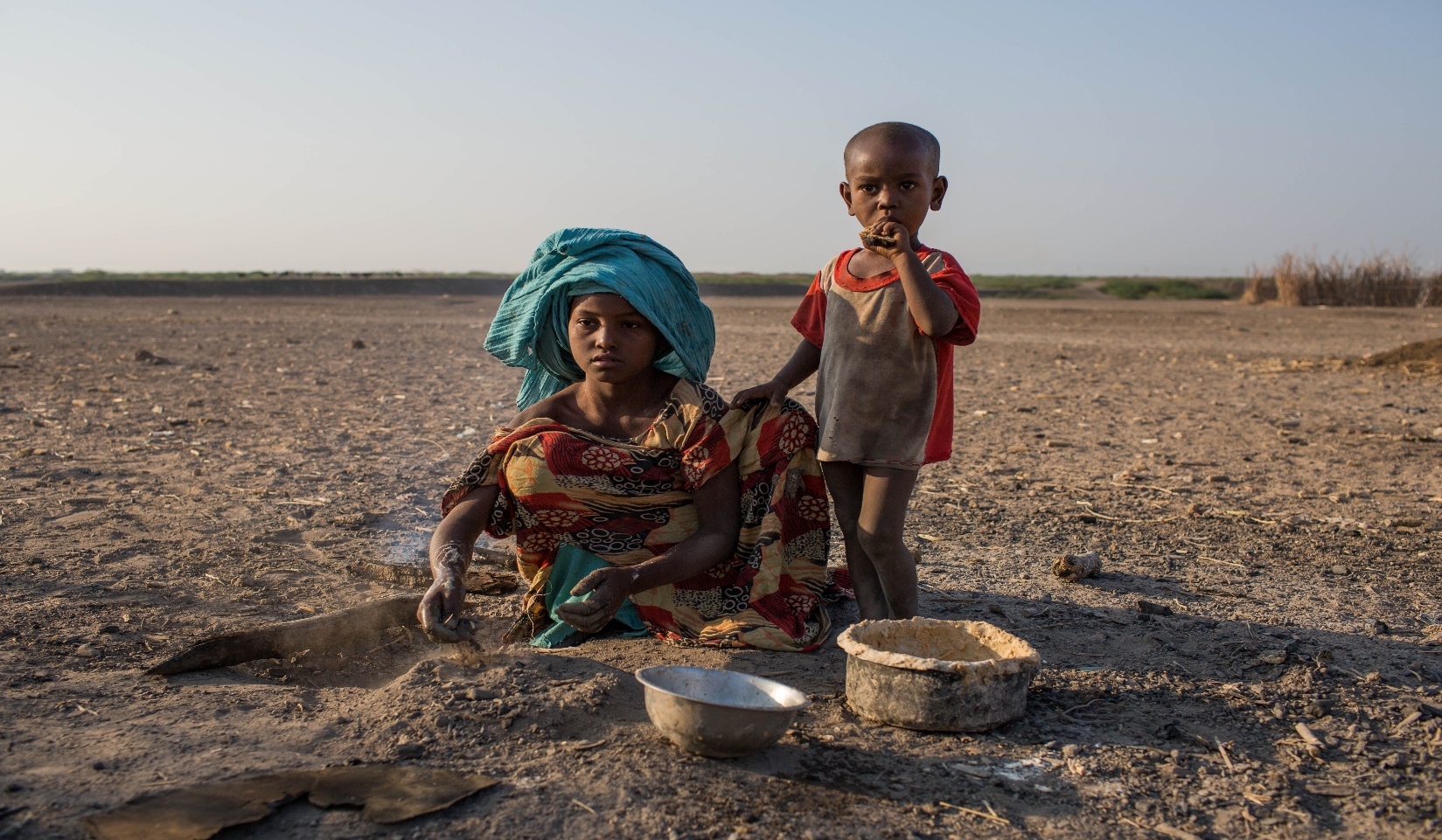
Simultaneously, the Greater Horn of Africa (Djibouti, Ethiopia, Kenya, Somalia, South Sudan, and Sudan) is experiencing a climate-driven health emergency. Massive flooding and water system damage have contaminated local infrastructure, triggering a surge in infectious diseases.
According to WHO’s August 2026 Strategic Response Plan, more than 37.8 million people in this region are currently experiencing acute food insecurity. Severe malnutrition has weakened community immune systems, fueling widespread outbreaks of:
- Cholera and Acute Waterborne Diseases: Triggered by flooded open-water networks and a comprehensive lack of clean sanitation.
- Measles, Dengue, and Chikungunya: Vector-borne and epidemic-prone diseases are expanding rapidly across displaced population clusters.
- Severe Acute Malnutrition (SAM): Over 5 million children under five currently require immediate medical therapy for SAM, creating a generational public health crisis that local ministries cannot fund.
The Security Vulnerability Architecture
These climate and epidemiological shocks do not happen in isolation; they are deeply intertwined with the continent’s security landscape. The convergence of these factors creates structural vulnerabilities that threaten state stability across three areas:
- Unregulated Migration and Border Management Failures: When localized water systems or agricultural lands collapse due to drought or flooding, it triggers immediate mass migration. Populations cross porous land borders completely outside formal health screening protocols. This movement accelerates the transmission of pathogens like Ebola into new urban centers and host communities, while straining local municipal services, which can spark xenophobic violence and civil unrest.
- Strategic Weaponization by Non-State Armed Groups: In active conflict zones, non-state armed groups deliberately exploit health crises. Rebel factions weaponize the absence of state support to position themselves as alternative governance structures, taking control of scarce food aid and medical distribution channels. Furthermore, when climate shocks destroy traditional farming livelihoods, it leaves large populations of marginalized youth financially destitute. This economic devastation provides armed groups and criminal syndicates with a steady stream of cheap recruits.
- The Collapse of Governance Legitimacy: When a state cannot manage recurring disease outbreaks, guarantee food security, or protect its population from environmental shocks, its institutional legitimacy deteriorates. This governance failure erodes public trust, paving the way for populist movements, civil disobedience, and armed instability to challenge formal state structures.
The Technical Strategic Blueprint For Action
To move beyond reactive, short-term crisis management, the African Union Commission, Regional Economic Communities, and national governments must implement a structured, collaborative response framework:
THE THREE-TIERED INTEGRATED RESPONSE MATRIX |
■■ TIER 1: EARLY WARNING & CONVERGENCE INFORMATION TRACKING • Integrate environmental GIS telemetry with Africa CDC disease logs. • Enforce real-time health-screening grids at all border nodes. |
■ TIER 2: CONTINENTAL LOGISTICS & ANNOTATED FUNDING SYSTEMS • Deploy the AU Standby Force to protect frontline medical corridors. • Mandate direct multi-agency funding allocations for health storage. |
■ TIER 3: TRANSNATIONAL SOVEREIGN ACCOUNTABILITY ARCHITECTURE • Enforce regional health security scores within AU Peer Reviews. • Implement mandatory cross-border epidemiological data tracking. |
Step 1: Implement Integrated Patho-Climate Early Warning Systems
National governments and RECs must immediately break down the operational silos separating their defense ministries from health and environmental agencies. SADC and East African early-warning systems must be linked directly with Africa CDC’s Epidemic Intelligence channels. By combining geospatial weather modeling with local health data, states can predict disease hot-spots up to 60 days in advance
Step 2: Establish Secure Medical Corridors and Deploy the AU Standby Force
Where active conflict directly blocks disease containment efforts, public health interventions must receive military and diplomatic security backing. The AU Peace and Security Council (PSC) must deploy targeted security details from the African Standby Force (ASF) to secure human-rights-aligned medical transit lines and protect frontline healthcare workers.
Step 3: Build Shared Transnational Health and Border Infrastructure
Individual countries lack the financial resources to isolate regional health shocks independently. Multilateral bodies must institutionalize regional burden-sharing by deploying biometric border screening networks across porous land checkpoints and establishing centralized, shared regional strategic medical reserves
Conclusion
The unfolding Super El Niño and the rapid expansion of the Ebola epidemic in the DRC serve as urgent warnings for the continent. Climate volatility and infectious diseases are among the most serious contemporary threats to continental stability. Managing these overlapping crises requires strong political will, proactive cooperation, and a willingness to look beyond traditional military defense models. By building an integrated, tech-driven response infrastructure and embedding public health security into the heart of the African Peace and Security Architecture, the African continent can protect its vulnerable populations, uphold the rule of law, and build lasting, systemic resilience against future global shocks.